The rogues’ gallery

Four people the era could not have happened without, documented where the record allows and finished in the book.

The businesswoman of the restricted district

Dutch May Prescott

What makes Dutch May more than a crime story is everything before that night. She was one of the district’s operators, a woman who accrued property on the wrong side of the tracks in an economy built to prevent exactly that. The book’s blurb puts it precisely: Dutch May Prescott kept the red-light district in the black.
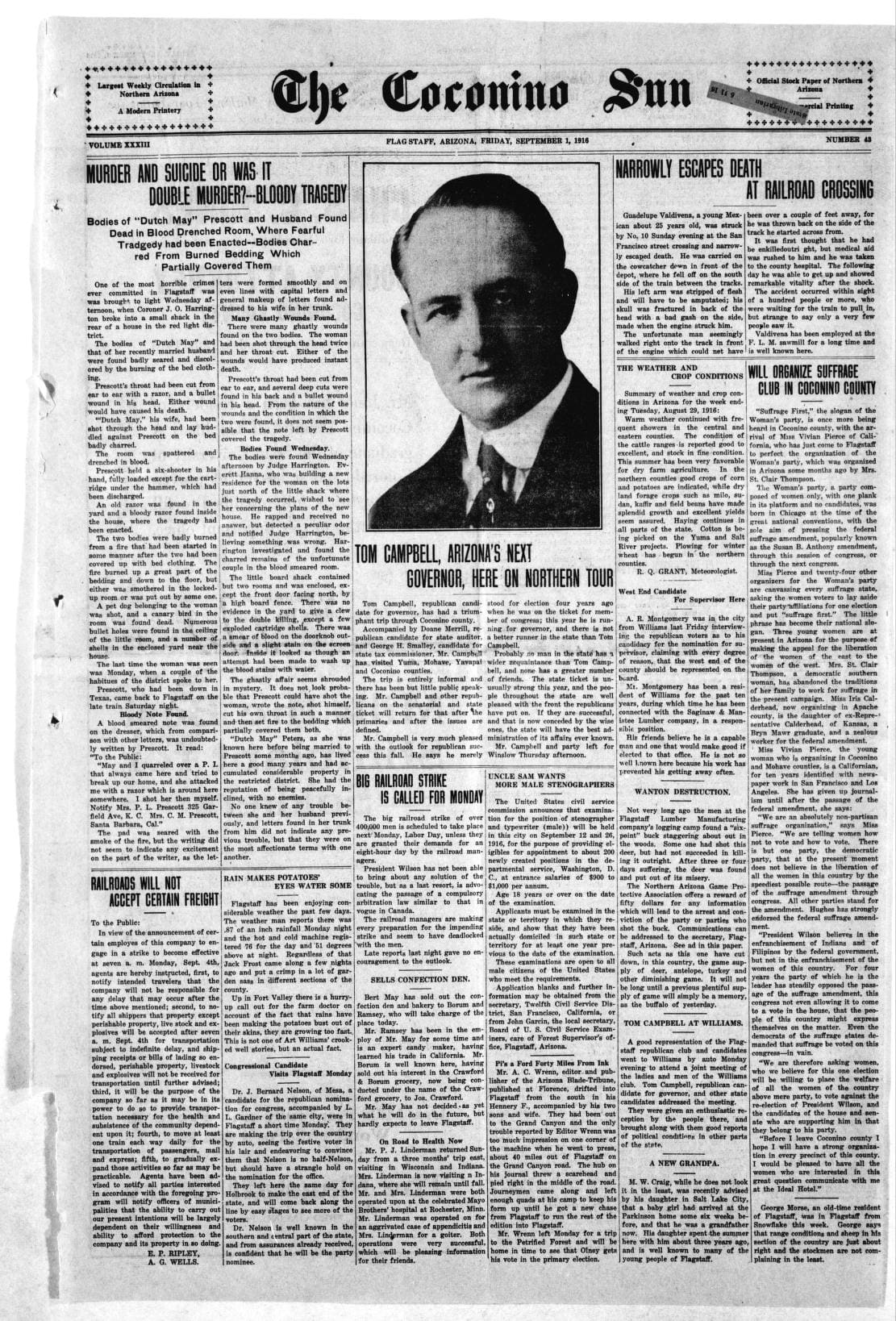
The full file, with the 1916 front page

Front page of the Coconino Sun, September 1, 1916, with the Dutch May Prescott headline at top left
The Coconino Sun, Friday, September 1, 1916. The Dutch May report leads the page. Library of Congress, Chronicling America, public domain.

The gunfighter at the end of the bar

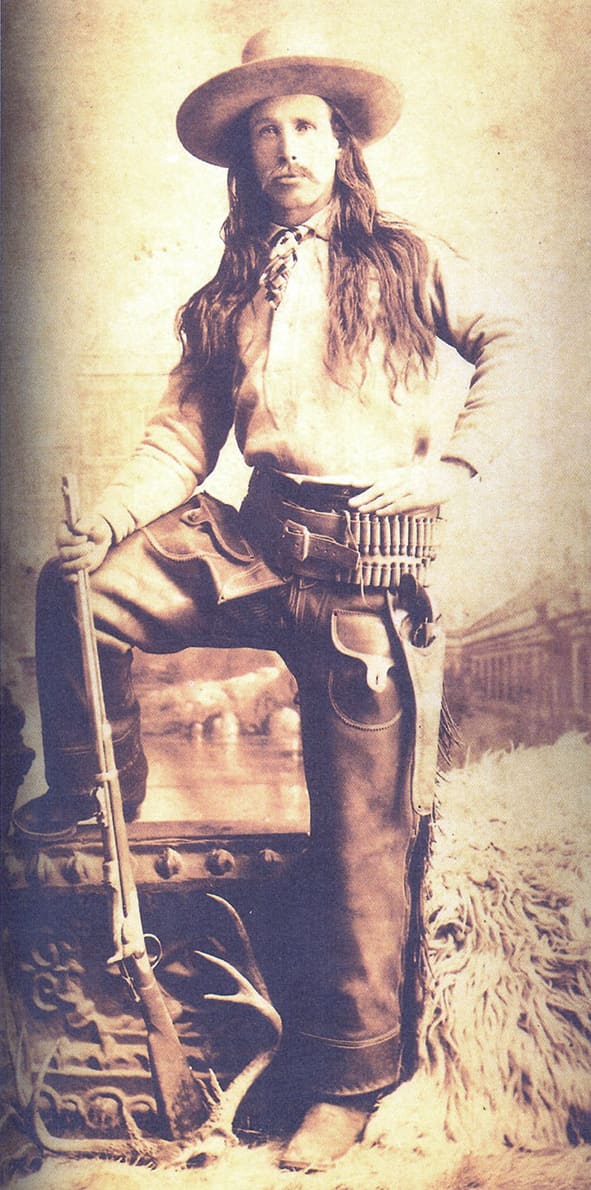
Commodore Perry Owens

Owens is famous for four minutes in Holbrook. On September 4, 1887, serving a horse-theft warrant during the Pleasant Valley War, the long-haired sheriff of Apache County fired five shots at the Blevins house, killed three men, wounded a fourth, and walked away untouched. Three coroner’s juries called it justifiable. The voters, unsettled by the arithmetic, retired him at the next election.

History remembers the shootout. Flagstaff remembered the man at the bar. Wicked Flagstaff finds Owens where the famous accounts do not follow him: in town, at the Parlor Saloon, in the years when the fastest hands in the territory were becoming its most awkward celebrities.

Studio portrait of Sheriff Commodore Perry Owens with rifle, long hair, and cartridge belt
Commodore Perry Owens, sheriff of Apache County, Arizona Territory. Arizona Historical Society via Wikimedia Commons, public domain.

The prospector who dug up everything but a fortune

Ben Doney

A Civil War veteran who reached the Flagstaff country around 1883, Ben Doney spent decades prospecting the cinder hills northeast of town and became, in the archaeologists’ exasperated phrase, an inveterate pot hunter. He amassed one of the era’s great private hoards of Sinagua artifacts from the Wupatki country and guided the archaeologist Jesse Walter Fewkes through it in 1900, a partnership somewhere between science and salvage.

Doney Park, the volcanic flat that used to be called Deadman Flat, carries his name, and his cabin was hauled to the Pioneer Museum in 1967. The barstool version of the man, the one the Parlor Saloon knew, is the version the book restores.


The madam with the secret door

Tea Cup Sallie

Some of the district’s women survive in the record as ledger lines. Tea Cup Sallie survives as a door. Flagstaff’s own destination bureau, of all sources, preserves the telling: a madam remembered by that nickname, and a discreet entrance near the building that now houses Paso Del Norte, built so the respectable could arrive without using the street.

That is nearly the whole surviving file, which is exactly the point. The restricted district ran on architecture like that, on nicknames instead of names, and on a town that preferred not to write things down. Reconstructing the women behind the nicknames is archive work, and it is the reason this book exists.


The banker who priced the town’s sins

Thomas E. Pollock

Pollock arrived at the mayor’s chair the way he arrived everywhere, holding the ledgers: lumber, banking, and ranching money in a town young enough to need all three. When the blue laws collided with the saloons and the district, it was Pollock who produced the compromise the publisher’s blurb credits with appeasing most locals.

His name survives on a National Register building over in Williams and in the quiet machinery of early Flagstaff finance. The compromise, the most interesting thing he ever engineered, survives mainly in this book.

The gallery runs longer in print: the saloon keepers, the editors, the marshals, and the respectable citizens who kept the whole arrangement profitable.